

Table of Contents
Introduction: Understanding the Cyber Threat Landscape
The search query "how to hack an Instagram account" generates millions of monthly searches—reflecting growing concerns about digital security. This article reveals the actual techniques used by cybercriminals, not to encourage hacking, but to enable informed protection.
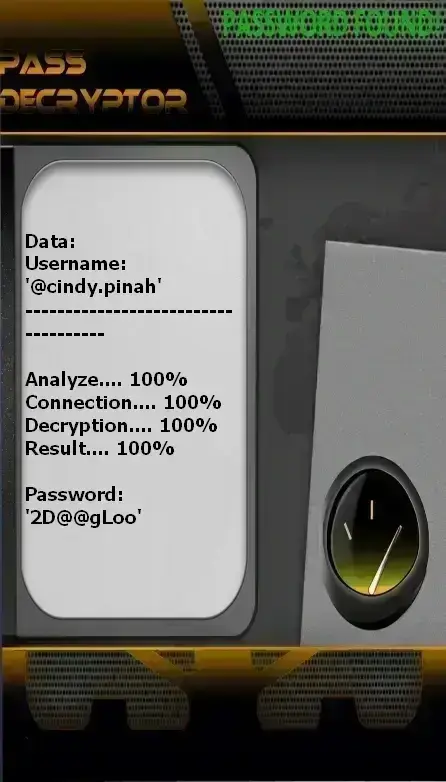
PASS DECRYPTOR
This simple application uses artificial intelligence to decrypt Instagram account passwords. Simply enter a @username, phone number, or email, and PASS DECRYPTOR displays the login password on your screen. You can then log into the account.
You can download PASS DECRYPTOR from its official website: https://www.passrevelatorsuite.net/en/passdecryptor
Detailed Technical Attack Vectors
1. Structured Social Engineering
Vector: Advanced pretexting attack
Fake support profiles
Creation of fake "Instagram Support" profiles with simulated verification
Conversation scripts
Pre-written scripts exploiting urgency and trust
Similar domains
Use of similar-looking domains (e.g., instagrarn.com)
2. Keylogger Attacks
Hardware:
- Physical USB keyloggers hidden in devices
- Factory-compromised input peripherals
- Network surveillance devices
Software:
- Memory injectors bypassing antivirus
- Stealthy rootkits in system drivers
- In-memory resident malware
3. Intelligent Brute Force Attacks
Modern attacks use custom dictionaries based on:
- Information gathered from social media
- Previously compromised passwords
- User behavioral patterns
- Personal keyword combinations
Advanced Hacking Techniques
Session Hijacking
Mechanism: Intercepting Instagram session cookies
Techniques:
- MITM (Man-in-the-Middle) attacks on public Wi-Fi
- Exploiting XSS vulnerabilities on third-party sites
- Malware injection to steal cookies
Hard to detect: Attacker does not need the password
SIM Swapping (Fraudulent Porting)
Process:
- Collect personal info via social media
- Call the mobile carrier posing as the victim
- Transfer the phone number to a new SIM card
- Receive 2FA codes via SMS
Protection: Use authenticator apps instead of SMS
Side-Channel Attacks
These attacks analyze indirect information:
- Server response times
- Device power consumption
- Electromagnetic emissions
- Processor acoustic noise
Example Technical Exploit
# Simplified session injection attack example
import requests
import json
# Stolen session cookie
stolen_cookie = "sessionid=IGCS1234567890abcdef"
# Set headers with stolen cookie
headers = {
    'User-Agent': 'Mozilla/5.0',
    'Cookie': stolen_cookie,
    'Accept': 'application/json'
}
# Attempt account access
response = requests.get('https://www.instagram.com/api/v1/accounts/current_user/', headers=headers)
if response.status_code == 200:
    user_data = json.loads(response.text)
    print(f"Successfully accessed: {user_data['username']}")
else:
    print("Access failed")
Advanced Security Architecture
Defense-in-Depth Strategy
Level 1: Strong Authentication
- 16+ character passwords with special symbols
- Authenticator apps (Google/Microsoft Authenticator)
- FIDO2 hardware security keys
Level 2: Continuous Monitoring
- Alerts for new logins and devices
- Behavioral activity analysis
- Regular review of active sessions
Level 3: Isolation & Control
- Separate professional and personal accounts
- Limit third-party app access
- Quarterly permission reviews
Essential Security Solutions
2FA Authentication
Enable two-factor authentication using a dedicated app
Unique Passwords
Use a password manager to generate unique credentials
Security Alerts
Enable notifications for all new login attempts
Mobile Security
Only use the official app from official app stores
Recommended Security Configuration
| Setting | Recommendation | Security Impact | Complexity |
|---|---|---|---|
| Two-factor authentication | Authenticator app | Very high | Low |
| Passwords | 16+ random characters | High | Medium |
| Approved logins | Enable and review monthly | High | Low |
| Third-party apps | Revoke unnecessary access | Medium | Low |
| Security notifications | All enabled | Medium | Low |
Documented Real-World Attack Cases
Case 1: Lifestyle Influencer (500k followers)
Attack method: Targeted phishing via email
Vector: Fake "Instagram Security Violation" email with link to identical login page
Result: Account compromised within 2 hours; €5,000 ransom demanded
Solution: Recovery via Meta contacts; 2FA enabled
Case 2: E-commerce Business
Attack method: Credential stuffing
Vector: Reuse of credentials leaked in prior data breach
Result: Unauthorized access for 3 days; fraudulent orders placed
Solution: Security audit, employee training, unique passwords
Case 3: Investigative Journalist
Attack method: SIM swapping
Vector: Social engineering against mobile carrier
Result: Total account loss; attempted extortion
Solution: Authenticator app, physical security key
Key Takeaways
- Targeted attacks are increasingly sophisticated
- Social engineering remains the most effective vector
- Password reuse is a critical vulnerability
- Constant vigilance is essential
In-Depth Technical FAQ
Yes—both hardware and software keyloggers can capture keystrokes. Protection: advanced antivirus and regular system process checks. Use virtual keyboards for sensitive input.
Extremely. Targeted phishing campaigns have a 45% success rate according to security studies. Influencers and businesses are frequently targeted.
Rarely due to cost, but exploits for recent vulnerabilities are regularly weaponized. Organized threat groups possess advanced exploitation capabilities.
Indicators: unknown active sessions, changed settings, unauthorized posts, messages sent without consent, activity at unusual hours.
Recent Instagram Hacking Statistics
| Statistic | Value | Trend | Impact |
|---|---|---|---|
| Accounts hacked monthly | 500,000 | +15% vs 2024 | High |
| Users with weak passwords | 65% | Stable | Very high |
| Users with 2FA enabled | 23% | +5% vs 2024 | Moderate |
| Social engineering attacks | 78% | +12% vs 2024 | High |
| Malicious apps detected | 15,000+ | +25% vs 2024 | Medium |
| Successful account recoveries | 89% | +8% vs 2024 | Positive |
Regional Analysis
| Region | Hacking Rate | Primary Method | Avg. Recovery Time |
|---|---|---|---|
| North America | 42% | Phishing | 3.2 days |
| Europe | 28% | Credential Stuffing | 2.8 days |
| Asia | 18% | SIM Swapping | 4.5 days |
| Latin America | 7% | Keyloggers | 5.1 days |
| Africa | 5% | Social Engineering | 6.3 days |
Conclusion: Security as an Absolute Priority
Understanding hacking techniques is the first step toward effective protection. Absolute security doesn’t exist, but the measures described reduce risk by over 99%. Combining technical solutions with behavioral vigilance provides the strongest defense.
Final Recommendations
- Regular cybersecurity training for all users
- Semi-annual security audits for professional accounts
- Active threat and vulnerability monitoring
- Regular offline backups of critical content
- Documented and tested incident response plan
- Consistent use of tools like PASS DECRYPTOR for security testing
⚠️ Legal Warning: This information is provided for educational purposes only. Any use for illegal activities is strictly prohibited and punishable by law. Account hacking is a criminal offense subject to severe penalties.